
Pettis Parole and Probation Compared
Community supervision is not one uniform status. A Pettis County probation case generally begins with a court disposition that permits the person to remain in the community under stated terms. Parole and conditional release follow imprisonment. The person has left the prison setting but remains in Missouri Department of Corrections legal custody. An unconditional or final discharge ends the supervision term. These distinctions matter because the court, Parole Board, and Division of Probation and Parole hold different parts of the record.
| Status | How it begins | Best verification source |
|---|---|---|
| Probation | A Pettis County court judgment permits community supervision | Case.net judgment and the responsible MODOC field office |
| Parole | The Missouri Parole Board grants release after imprisonment | MODOC active search, Board order, and field officer |
| Conditional release | A sentence reaches its statutory supervised-release portion | MODOC calculation, Board action, and field office |
| Final discharge | The authorized term ends or early discharge is approved | Discharge record, historical data, and court record |
A transfer from Pettis County Jail to MODOC is not a community release. The county record should identify the receiving authority. Only a later MODOC record can show prison custody, parole, conditional release, or discharge. The full Pettis County custody and release-record path is available on the released inmates search page.
- Parole
- Supervised community status granted after part of a prison sentence.
- Probation
- Court-ordered community supervision, often instead of prison.
- Discharge
- The end of parole, probation, or conditional-release authority.
- Absconder
- A supervisee alleged to have stopped reporting or left supervision without authorization.
Verify Pettis Post-Release Supervision
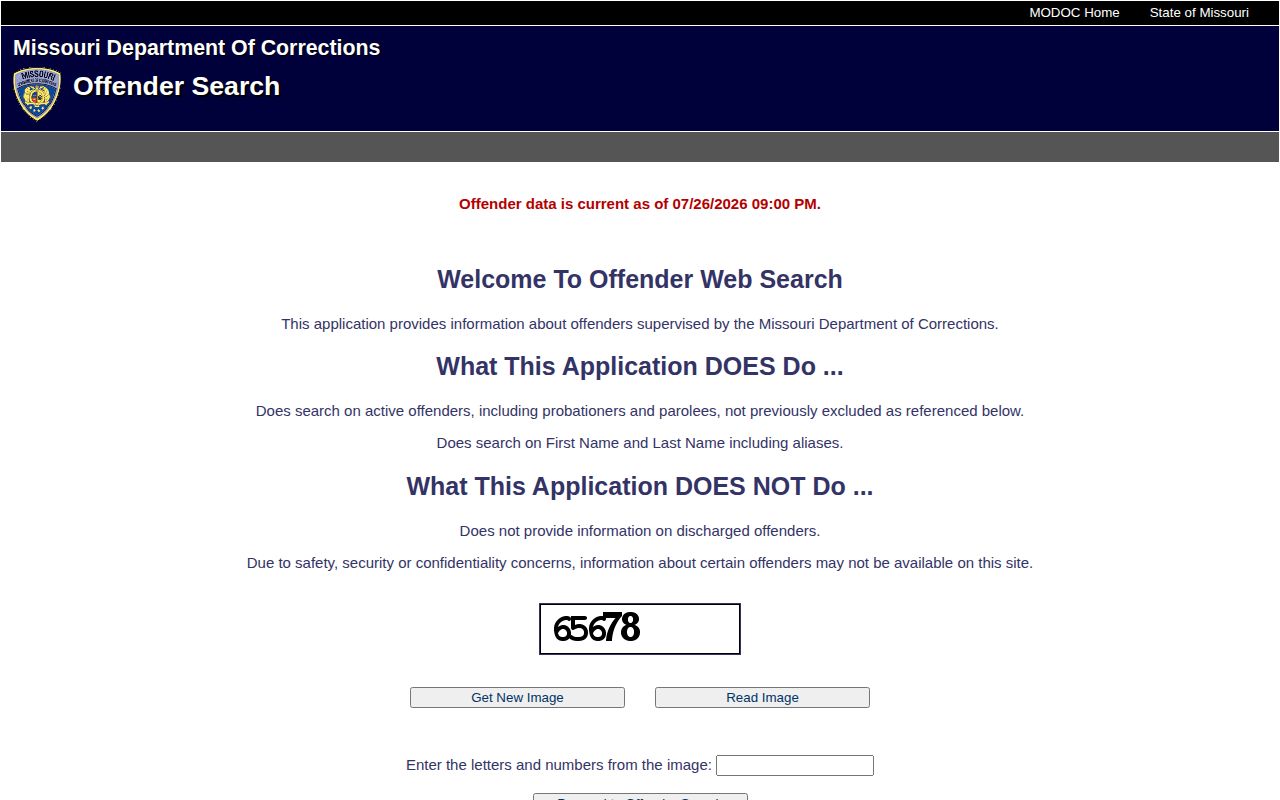
The MODOC Offender Web Search covers active offenders, including people on probation and parole. It requires a CAPTCHA and accepts first and last names, including aliases. The search expressly excludes discharged offenders. That means an active field result can support continuing supervision, but no result cannot prove release or discharge.
- Search the legal first and last name, then try a known alias when needed.
- Compare the DOC identifier, assigned place, location function, conviction county, and other lawful identity clues. Do not choose a record by name alone.
- Read field status separately from institutional status. A field location points to community supervision; an institutional location points to prison custody.
- Review Case.net for the Pettis County judgment, probation order, revocation entries, or sentence history.
- Contact the office shown in the active record. District 29S is useful only when it is actually the assigned office.
- If the person is absent, check the MODOC historical data, court record, or request a discharge record. Never translate silence into “released.”
The official active-search notice explains the system’s coverage and discharged-offender exclusion.
When the active search returns a possible match, compare the location function before drawing a conclusion. MODOC’s historical data uses a field code for community supervision and an institutional code for prison placement. A Pettis County resident can be out of prison yet still active under parole or conditional release. Someone with a Pettis conviction may also be assigned elsewhere. Location is part of the status, not proof of residence or a county-jail release.
A former state prisoner who no longer appears needs a different workflow. Search the historical charge-based dataset by DOC identifier and carefully matched identity data. Review the Pettis sentence county, cause number, completed flag, minimum and maximum dates, and concurrent or consecutive indicator. Multiple rows can describe one sentence structure. Then request the discharge record when an authoritative answer matters. The working dataset helps locate the right case, but MODOC does not guarantee its completeness or accuracy.
Note: Record the search date because assignments, supervision status, and data-current timestamps can change after a Pettis County check.
Pettis Supervision at District 29S
District 29S–Sedalia gives Pettis County a local MODOC supervision contact. It is a field office, not a jail and not a place to verify a county-jail exit. The office can address a current assignment when the active record points there. A past Pettis County conviction does not guarantee that District 29S supervises the person now, so confirm the office before discussing a named case.
Missouri Probation and Parole, District 29S–Sedalia205 Thompson Road
Sedalia, MO 65301
660-530-5530
Weekdays, 8 a.m.–5 p.m., except state holidays
After-hours Command Center: 888-869-3195
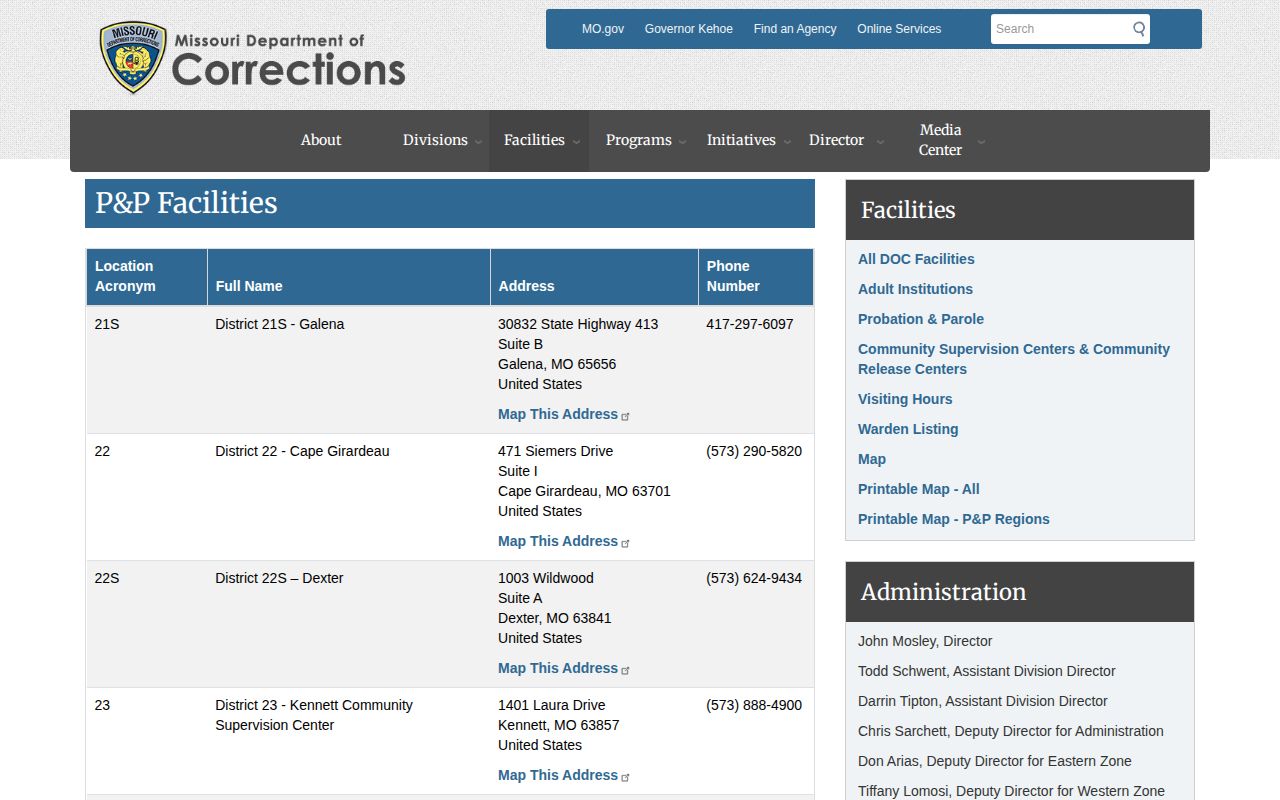
The official District 29S listing provides the local office information.
Pettis Supervision Terms and Violations
MODOC says releasable supervision information may include present offenses, judgment and sentence, conviction county, supervision term, standard or special conditions, confirmation of supervision, officer and office, custody or bond status, a parole or conditional-release date, and a Board decision. Conditions are rules attached to community supervision. A violation allegation may lead to a report, warrant, custody, revocation process, or a change in release timing, but the allegation and final decision are not the same event.
An absconder is someone alleged to have stopped reporting or left supervision without authorization. The active offender record and field office are the right starting points. Case.net may show a court warrant in a probation matter. Do not use VINELink as a complete absconder database. VINE is a custody and notification layer, and its events must be checked against the agency that created the underlying record.
Public status information and case-specific instructions are also different. A field office may confirm supervision and release public details, but it may withhold information protected for safety, confidentiality, medical privacy, or institutional security. The officer’s name, office, supervision term, standard or special conditions, and custody or bond status are among the categories MODOC says may be public. A records custodian should decide any limit instead of treating every supervision detail as open.
Note: A warrant, violation report, arrest, and revocation are separate events, so verify the latest order before describing current supervision.
How Pettis Supervision Ends
Supervision can end at its scheduled expiration or through an authorized early discharge. A sentencing court may reduce probation. The Parole Board may authorize early discharge from parole or conditional release. MODOC also administers earned compliance credit under section 217.703. Eligible supervisees may receive thirty days of credit for each full compliant calendar month. Credit does not accrue in specified months involving violations, custody, pending motions, or absconding.
Earned compliance credit shortens eligible community supervision. It is not prison good time and should not be used to calculate a prison exit. MODOC recalculates remaining supervision at least twice each year. Statutory conditions, including minimum jurisdiction and restitution requirements, still govern final discharge. The MODOC explainer directs calculation concerns to the officer and states there is no formal appeal from the earned-credit calculation.
Once fully discharged, a person should not be expected in the active name search. Look for a discharge document, court order, or a completed row in the MODOC historical dataset. A completed flag supports sentence history, but it is not a certified physical release time.
A calculation problem should go first to the supervising officer. The officer can identify excluded months, custody periods, violation reports, or other events that affect eligible credit. Final discharge still needs an official record. A person’s disappearance from the active portal might instead result from a name mismatch, protected information, or a data issue. Missouri’s active-only design makes that caution especially important in Pettis County.
Pettis Parole Hearing Records
The Missouri Parole Board determines parole and conditional-release matters. No official public search for individual hearing calendars or decisions was verified. Missouri section 217.670 allows meetings, records, and votes involving parole, probation, or pardon to be closed. The lack of a public result page should not be filled with an unofficial calendar.
For a named public-status question, ask the Board or its records custodian for the hearing date, decision or order, decision date, parole or conditional-release date, and any open portion. Give the full name, DOC number, cause number, and institution. Supported outcome terms include grant, denial, conditional-release extension, revocation, and appeal or fuller Board consideration. A grant still does not prove the person walked out on the decision date.
The Board is at 3400 Knipp Drive, Jefferson City, MO 65109, and can be reached at 573-751-8488 or DOC.MissouriParoleBoard@doc.mo.gov. Records requests use ParoleBoard.SunshineRequest@doc.mo.gov. Eligible victims have a separate notice path through MODOC Victim Services.
Victim Services may arrange eligible notice of a hearing, its result, release to the community, escape, or death. Hearings may occur at an institution or by videoconference through Probation and Parole Central. That route is distinct from general VINE registration and from a public Board records request. It should not be presented as a universal public hearing calendar.
Pettis Release Status Corroboration
The Missouri Sex Offender Registry may corroborate community presence only for a person legally required to register. It supports name, alias, birth, county, map, and address-type searches. A non-incarcerated address does not prove when or where a person was released. Absence proves nothing for nonregistrants or unmatched records.
When sources conflict, identify which event each one reports. A jail record proves the end of Pettis custody. An active MODOC field record supports community supervision. A Board order explains parole authority. A court docket explains probation or revocation. The historical dataset helps trace a discharged case. Keep those records in their proper lanes.